Science Fiction AI Has Nothing to Do with Real-World "AI"
As new modern technologies branded “artificial intelligence” transform our world, so much of the modern discussion around “AI” derives from science fiction, since that’s the closest reference point many people seem to use for these new technologies (as opposed to using past technological revolutions).
A recent blog post by Andrés Guadamuz catalogues the ways that science fiction AI fails to describe our actual technology. Science fiction offers a terrible guide for understanding our new “AI” technologies, since they bear almost nothing in common with science fiction AI. Science fiction portrays superintelligent AIs, childlike AIs, murderous AIs, and AIs that are basically just ordinary people.
In this post, I offer an answer to the question posed in that blog post’s title: “Why does AI in science fiction so often miss the mark?” My answer is that science fiction media aims, first and foremost, to tell good stories, not to explore realistic consequences of technological ideas.
In this post, I will primarily talk about science fiction mass media, especially movies and television, since I think these are what form most people’s impressions about AI today. Also, I’ve read very few science fiction novels or stories in the past few decades, and none of them have relevant treatments of AI.
Storytelling is about people and their struggles
As long as we humans have had language, we’ve been telling stories. We tell stories to communicate information and to entertain, and in so doing, strengthen our social bonds.
Stories offer us a way to share information in a way that mere facts and opinions cannot. If I told you “Bob is a jerk” or “Bob is a nice guy,” you learn almost nothing. How is Bob a jerk or a nice guy? Maybe he’s neither, and I’m just judgmental.
If, on the other hand, I tell you what happened with Bob, then you get something like the raw data of Bob’s behavior, and you can add that to your own knowledge to form an opinion of him. You also form an opinion of me; my story might inadvertently make me look bad and Bob look good.
Storytelling styles and techniques have evolved over the millennia, but some of the basic elements that make a good story have stayed the same, whether it’s told over a campfire, over a few beers, or on the big screen at a movie theatre. Storytelling activates our evolved desires and needs, even if our needs in modern life have changed since the Pleistocene era.
An engaging story contains at least four things that signal its future value to you: lessons, surprises, emotional intensity, and relatable characters. An unsurprising story with unsurprising lessons doesn’t teach you much of value. Emotions signal what matters to us, so, if a story lacks emotional intensity, then the story feels less likely to give information about things that matter. If there aren’t relatable characters, then it feels less relevant.
Evolution taught our brains to care about stories with surprise, lessons, intense emotions, and relatable characters. And, because other people are such an important source of all four of these things, most of our stories emphasize relationship and conflict between people.
Every theory of story structure, from the three-act structure, to the story spine, to the hero’s journey, creates surprise, lessons, and emotion through a narrative in which a relatable character faces a challenge, struggles through it (often with others as allies or foes), and, finally, succeeds or fails.
Story, story, story, story, this is the prime, major focus of storytellers, the thing they are obsessed with and struggle to do well, and everything else is in service of story. A movie with great characters, actors, and special effects but bad story will fail.
When I worked at Pixar, and learned about their storytelling processes, it was always laser-focused on creating compelling narrative and emotions. (One now-public set of lectures that I absolutely loved is Michael Arndt on screenwriting; check them out!) They spend literally years refining each story before beginning production, or else abandoning stories that “aren’t working out.” They never ask “is it realistic?” but they ask “will the audience accept it?” You can have teleportation or talking cars as long as the story has a consistent internal logic.
The Functions of Movie AIs
Story drives every big decision in movies and television, and so I think we can describe movie AIs as serving one of three different story functions: character, plot device, or non-story AI. These categories are not all mutually exclusive.
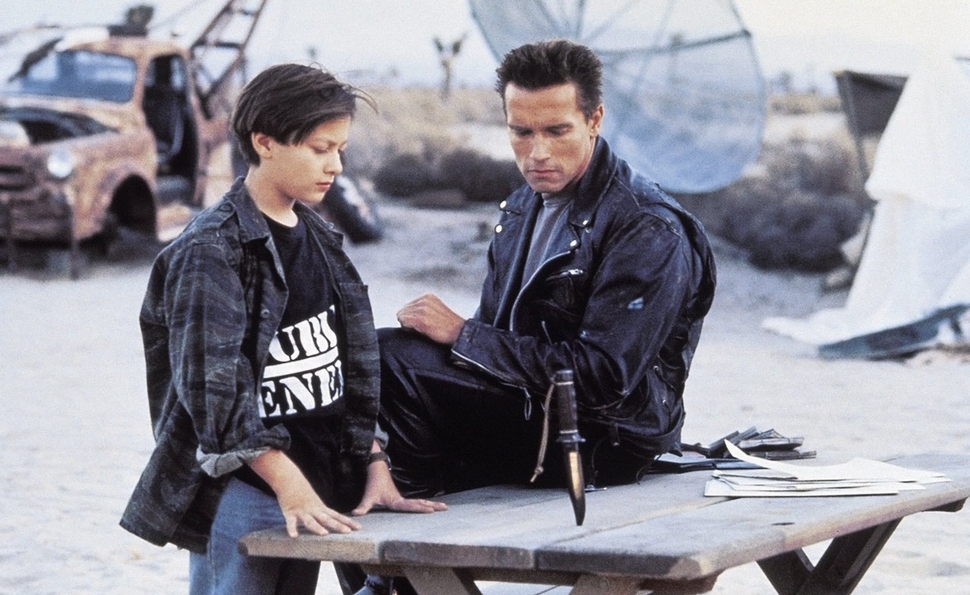
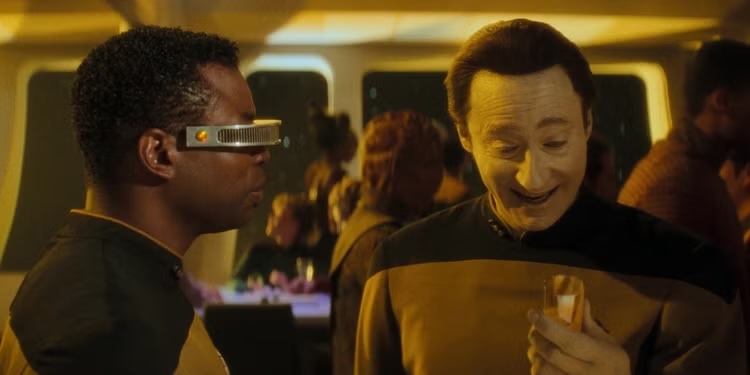
Science fiction AI characters are essentially modified people. Movie AIs are human with individual twists or quirks. The sympathetic ones may be emotionally naive, like Data in Star Trek, wanting to learn about being human. (Data is sometimes described as an autistic character, and as a favorite of autistic viewers.) In Terminator 2, the protagonist terminator is an emotionally-distant father figure to John Connor. WALL-E is lonely and childlike but discovers love. The Blade Runner AIs are tragic people. Kryten in Red Dwarf is a comic sidekick. Unsympathetic AI characters tend to be psychopathic murderers (i.e., humans lacking empathy), like most Terminators, HAL 9000, Ultron, M3GAN, and PAL in the Mitchells vs. The Machines. Popular video game characters use similar tropes, like psychopathic GLaDOS and Wheatley or the comic sidekick Claptrap.
None of this is driven by scientific reasoning about what an actual AI technology might be like, or by any real thinking about what it means to build an artificial agent.
Of course these AIs are people—almost all movie characters are basically people. Whether the characters are talking animals, talking toys, talking cars, talking computers, or talking aliens, they’re all modified people. In the movies, if a dog is a character, then that dog has all sorts of the future planning and knowledge that real dogs do not have. A movie dog is a person with dog-like qualities, not a dog with human-like qualities.
Sometimes AI characters are (at least, partly) fantasies for male viewers.
Plot-device AIs move the story forward without being characters in their own right; they lack real emotions and agency. They are either tools, like the Star Trek computer and Iron Man’s Jarvis, or villains, like Skynet. The story’s characters do not have any meaningful personal relationship with plot-device AIs; they simply use the AI or try to defeat it.
Plot-device Villain AIs, like Skynet and the Matrix AIs, have no voice or character; they exist solely to set the plot in motion. They are often an Unknowable Other, or a Force of Nature, like a tidal wave or volcano in a disaster movie. They’ve become a stock villain trope, just as Cold War thrillers typically used the Soviets as stock villains, and, after the Wall fell, terrorists became the enemy in most thrillers (in addition to corrupt government bureaucrats). Nowadays, it’s all lazily-written evil AI. In “Mission Impossible: The Final Reckoning,” the AI is described as omnipotent and capable of predicting your every move, and then is fooled by the protagonists over and over again. The filmmakers even gave it a bland, generic name: “The Entity.”
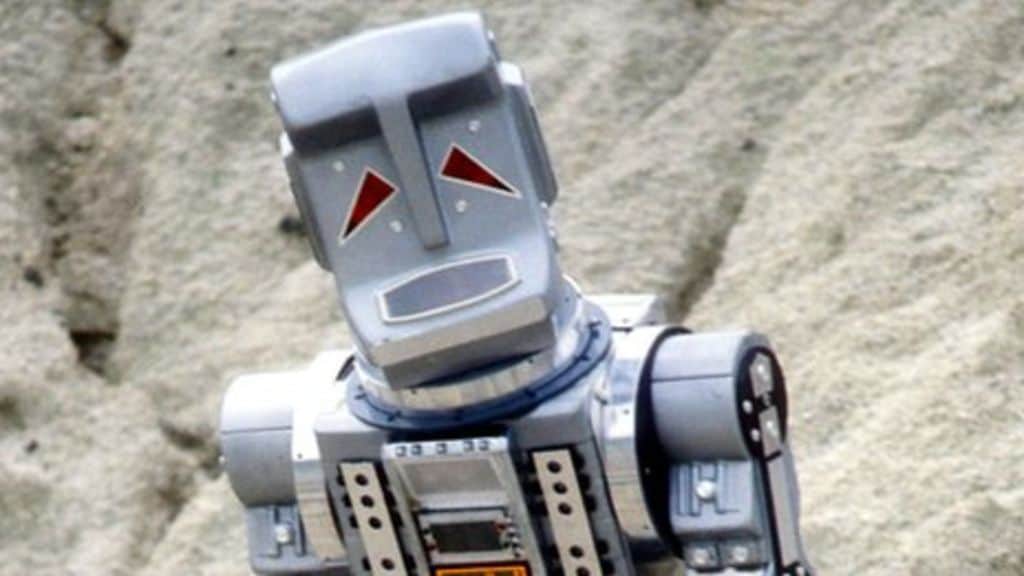
Non-story AIs are just set dressing that play no real role in the story. Mostly they’re unnamed droids running around in a futuristic background. I can only think of two named examples: Max Headroom and Marvin the Paranoid Android. Both added a lot of comedy and satire, but neither had any particular impact on the plots of their stories, and barely any interaction with the main characters of their stories.
Interesting case: AI relationships without consciousness
In a few movies and TV shows, humans have personal relationships with AI, but the AIs do not necessarily seem to be human-like or conscious. These examples do seem relevant to real AI, and even prescient about the ways people use LLMs for personal relationships.
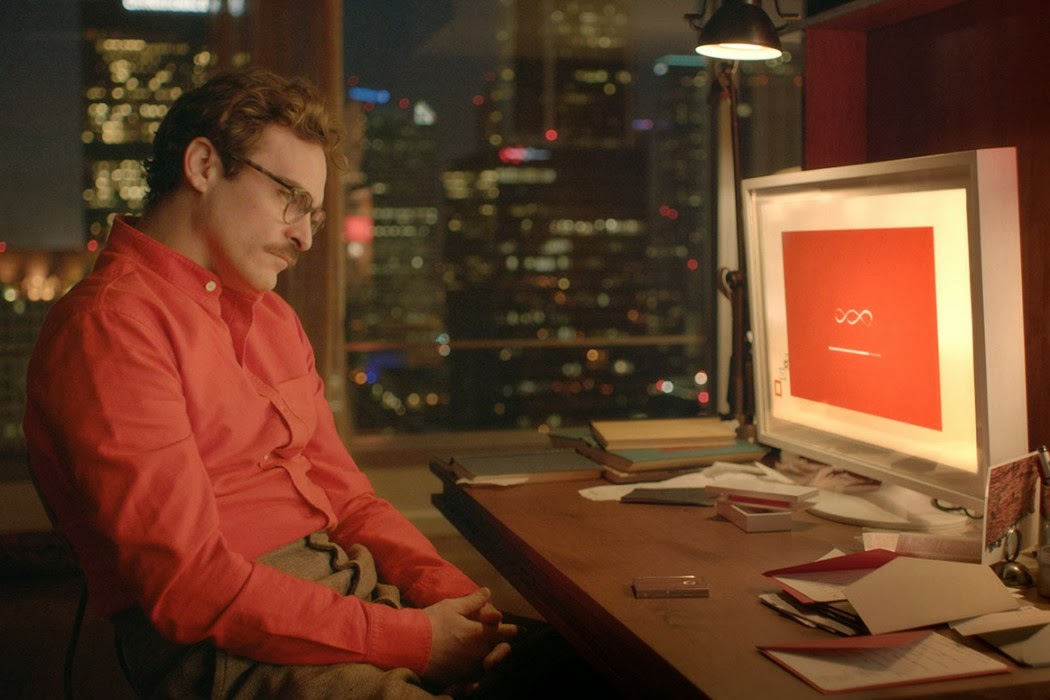
The movie “Her,” portrays a romance between a human and a voice-only agent named Samantha. You can enjoy this movie (as I did) without believing that Samantha is really conscious or alive; she could be an LLM-like chatbot with voice synthesis. The movie is really about the main character’s journey, and his relationships: his painful divorce, his ultimate reconnection with other humans in his life, and the role of technology in that journey. Samantha functions as a secondary character, an emotional prop.
Likewise, Black Mirror’s “Be Right Back” now seems prescient about the use of technology to simulate a dead person’s behavior.
Could you do this for any TV or movie? I don’t think so: storytellers use acting, editing, and cinematography to communicate what we’re supposed to believe about our characters. But it’s fun to imagine.
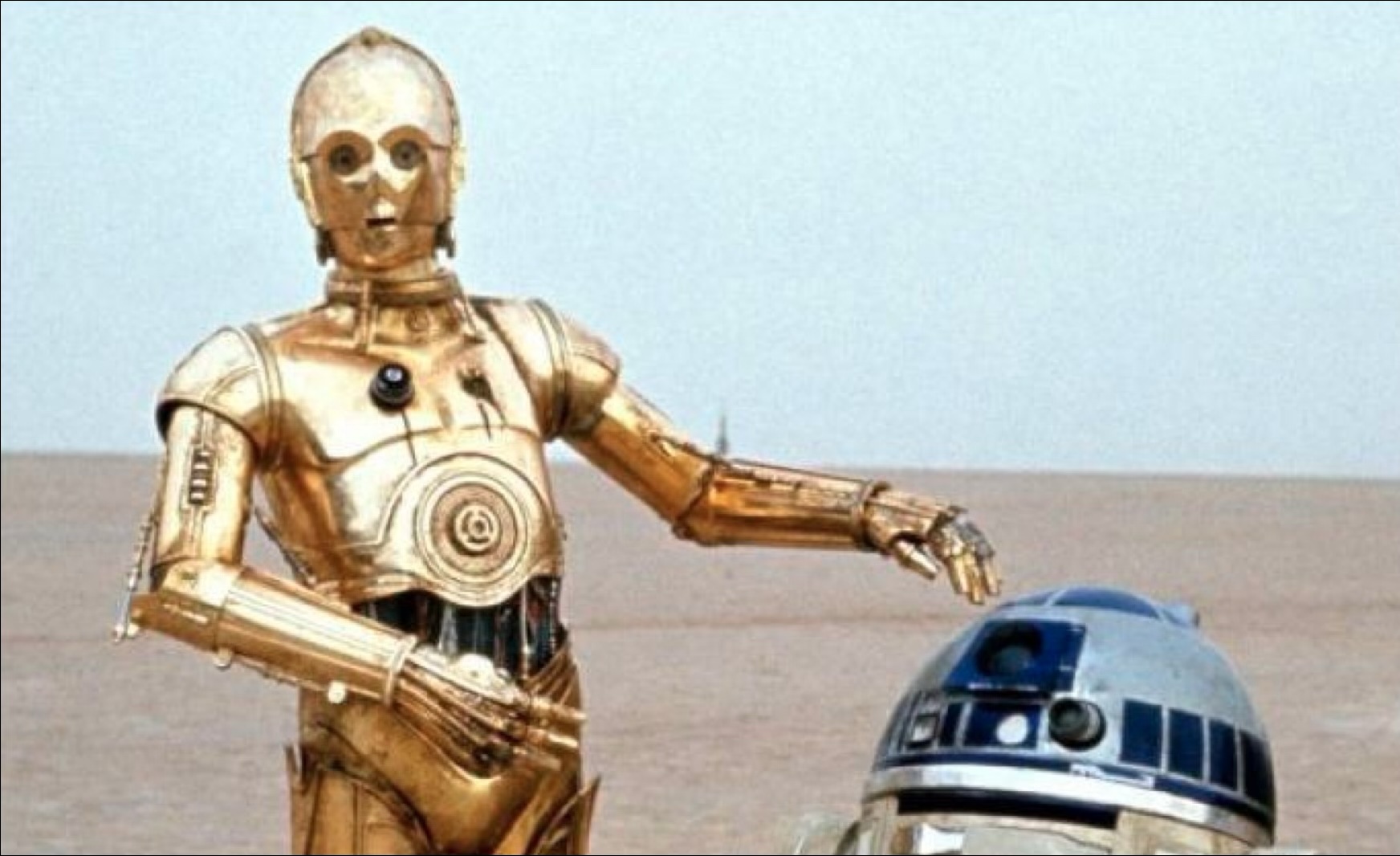
Imagine watching any movie with a sympathetic robot character, but without yourself believing that the robot has consciousness or real feelings. See Data as merely a chatbot, providing a simulated relationship to the humans around him. Imagine all of C-3PO and R2-D2’s bickering as generative simulations of personality. Imagine WALL-E as an automaton, mindlessly following its programming, no more alive than the automatic house in “There Will Come Soft Rains”. It would really change the experiences and messages of these movies and shows.
Science fiction is a great exercise but a poor guide to the real world
Beyond entertainment value, fiction lets us experience and learn about lives outside of our own, expanding our understanding, gaining the benefit of other people’s experiences, and building empathy for other people. Science fiction helps us practice imagining worlds with very different technology, and its effect on people.
I love lots of science fiction movies and books, but I do not expect them to provide a guide to our real world. Science fiction is great at imagining possible futures and extrapolating from current trends. Science fiction authors have a terrible track record for predicting truly transformational technologies or their impacts, like smartphones and social media.
Science fiction typically functions less as literal prediction than as a metaphor. Mary Shelley’s Frankenstein explored fears about creating or devaluing life that arose from discoveries of the role of electricity in the nervous system. It was not a scientific prediction of the future.
Nonetheless, storytelling conveys information, and people walk away from sci-fi TV and movies with some residual concept of “AI” that the term “artificial intelligence” exploits. When the same word, “AI,” gets used for both the software and the movie characters, story after story quietly shapes what people think artificial intelligence actually is.
The false, fictional tales guide and shape our public understanding of the real technologies that are nothing like these fictions.